


Real, fake or AI? Five questions to help students critically evaluate digital content
A photo that was never taken. A news story that is inaccurate. A video showing someone saying something they never actually said. Artificial intelligence (AI) makes it increasingly easy to create convincing images, texts and videos. At the same time, it is becoming harder to determine which information online can be trusted.
For teachers, this presents an important challenge: how do we prepare students for a digital world in which it is becoming increasingly difficult to distinguish fact from fiction?
During Media Literacy Week, we reflect on the importance of engaging critically with digital information. After all, media literacy involves more than knowing how to find information. It also means understanding where information comes from, who created it and whether it can be trusted.
You do not need to be an AI expert to address this topic. By teaching students to ask the right questions, you can help them become more aware of the content they encounter online.
Five questions to help students critically evaluate digital content
The following five questions provide a practical starting point for discussing online information, AI-generated content and the reliability of digital sources with students.
Who created this?
Start by looking at the creator. Who published the image, video or text? Is the creator known? Is it an individual, organisation or news outlet? And what interests might influence the way this information is presented or shared?
Discuss with students why it is important to look beyond the content of a post. The identity and intentions of its creator can also provide clues about its reliability.
What is the original source?
Information spreads quickly across social media and other online platforms. The same post can appear in multiple places, without it being clear where it originally came from.
Encourage students to trace information back to its original source. Who published it first? Is the same information shared by other reliable sources? By comparing sources, students learn to put information into context.
What evidence is missing?
A convincing image or confidently written text does not automatically make something true. What evidence is provided? Are there concrete facts, sources or references? Or is it simply a story that sounds plausible?
Students can learn to look not only at what is being claimed, but also at what is missing. This helps them distinguish between facts, opinions and assumptions.
Could AI have played a role?
AI can now write texts, generate images, imitate voices and create realistic videos. As a result, digital content can look authentic even when it has been generated entirely or partly by AI.
Look for clues such as unnatural details, unusual shadows, illogical movements or inconsistencies in an image or video. At the same time, it is important to explain that AI-generated content is becoming increasingly difficult to identify. Technical clues are not always enough to establish whether something is real or AI-generated.
Therefore, discuss not only how students can recognise AI-generated content, but also why it is important to remain critical when they are unsure.
How can you verify this?
The most important step is not to jump to conclusions. What additional information would you need to verify a claim? Can you find the same information in other reliable sources? Is there more context available?
For images, for example, you can use reverse image search to find out where an image has appeared before. Students can also compare different sources and check whether key details match.
Make it clear that not everything that appears online needs to be shared or believed immediately. Sometimes, the best answer is that you cannot establish something with certainty just yet.
Developing critical thinking in a world with AI
The rise of AI makes media literacy increasingly important. Students need to learn not only how to use new technologies, but also how they work, what their limitations are and how AI influences the information they encounter every day.
This is not just about recognising AI-generated content. Above all, it is about developing a critical mindset: asking questions, verifying information and thinking carefully about what they see and share online.
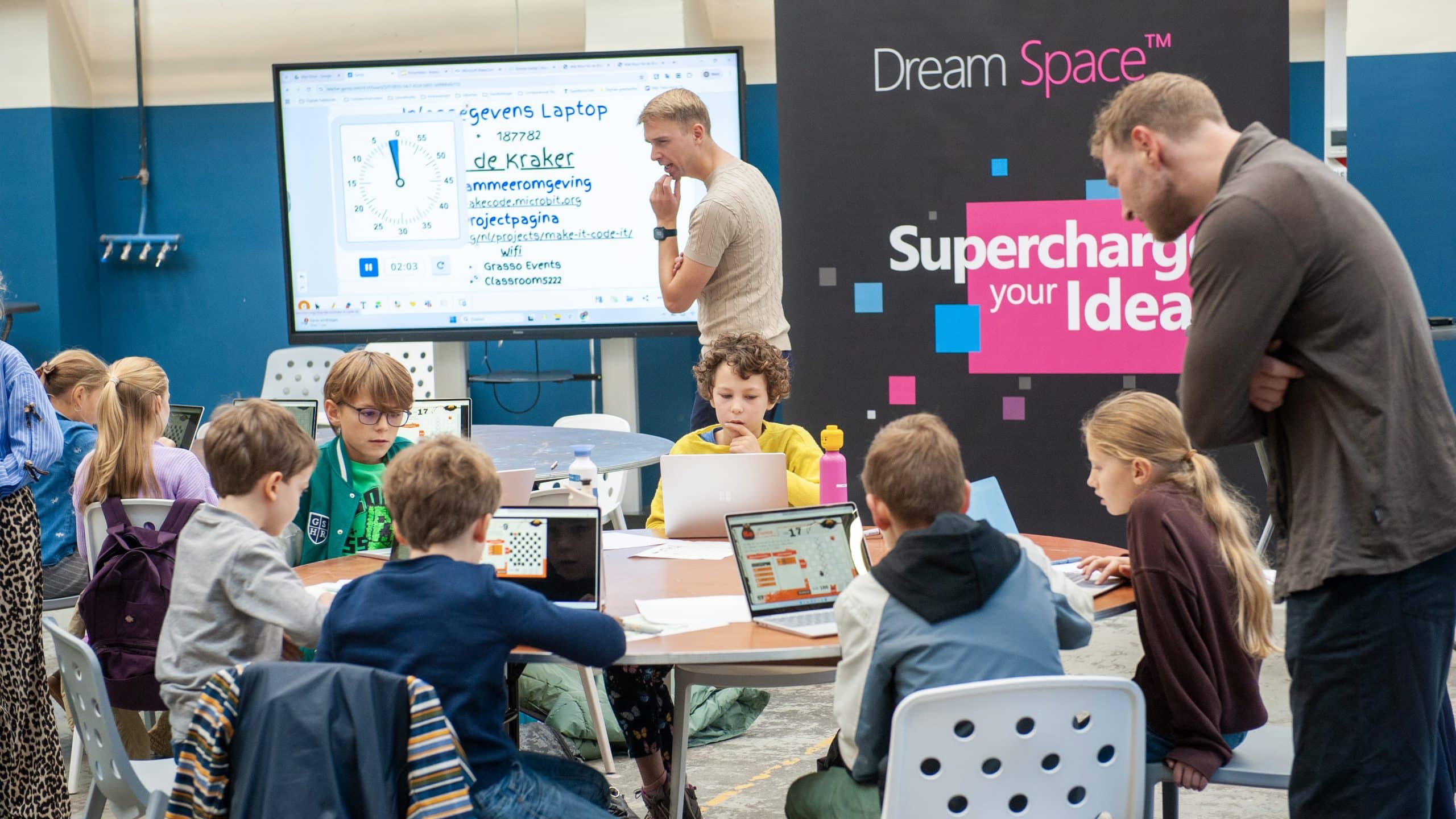
At Dream Space, we therefore focus on both using AI and evaluating it critically. During our AI workshop, students discover how artificial intelligence works and explore the possibilities and risks of this technology.
Because the better students understand what AI can do and where its limitations lie, the more confidently and consciously they can navigate the digital world.